

An RFI stalls a site faster than almost anything else. A supervisor spots a clash between the drawing and reality, sends a vague WhatsApp message to the consultant, and three days later nothing has moved because nobody could act on what was written.
Quick Answer: A Request for Information (RFI) is a formal written query raised by the contractor or site team to the designer or consultant when a drawing, specification, or instruction is unclear, missing, or conflicting, and it must be specific enough that the recipient can answer without needing a second round of questions.
The truth is, most delays blamed on “slow consultants” are actually caused by poorly written RFIs. If you supervise a site, manage a project, or run a subcontractor crew, this is a document you need to master. It protects your programme, your budget, and your professional record.
What Is an RFI and Why Does It Matter on Site
An RFI is a formal communication tool used to close the gap between design intent and site reality. It is not a complaint, not a variation order, and not a casual question shouted across the site. It is a written record that says: here is the problem, here is what I need to know, and here is what happens if I don’t get an answer by a certain date.
In simple terms, an RFI exists because drawings are never perfect. Structural details clash with architectural finishes. A pipe route crosses a beam that was not shown in section. A specification calls for a material that is out of stock in Kenya. When that happens, someone has to ask, and the answer has to be documented.
Under most standard forms of contract used on Kenyan projects, including FIDIC-based contracts and JBCC agreements, instructions from the engineer or architect must be in writing to be valid. An RFI is the mechanism that forces that writing to happen. Verbal instructions on site protect nobody when a dispute comes up later.
An RFI is also different from an ordinary site diary entry. The diary records what happened on site that day. The RFI records what you are waiting to find out before you can proceed safely and correctly. Confusing the two is a common mistake. A supervisor writes the issue in the diary and assumes that counts as raising it, but a diary entry rarely reaches the design team fast enough for anyone to act on it.
When Should You Raise an RFI
Not every question needs a formal RFI. But the moment an answer affects cost, time, or safety, it does.
Raise an RFI when:
- Drawings from different disciplines contradict each other (architectural vs structural, for example)
- A specification references a material, standard, or product that is unclear or unavailable
- Site conditions differ from what the drawings show (unexpected rock, groundwater, existing services)
- An instruction is missing for a detail that has already reached the point of execution
- You need written confirmation of a verbal instruction given on site
Here is why this matters for your programme. If you wait to raise the RFI until the crew is standing at the wall with nothing to do, you have already lost the time. Foremen who read drawings two weeks ahead of the work catch these issues early enough that the RFI response comes back before it becomes a bottleneck.
How to Write an RFI That Gets Answered Fast
A weak RFI produces a weak or delayed answer. A strong RFI gives the consultant everything they need to respond in one pass.
Every RFI should include the following fields:
| Field | What to Include |
|---|---|
| RFI Number | Sequential, tied to project and discipline (e.g. RFI-STR-014) |
| Date Raised | Date the query was submitted |
| Project Reference | Project name and drawing/spec reference |
| Location | Grid line, level, room, or chainage |
| Description of Issue | Clear statement of the conflict or gap |
| Question | The exact question needing an answer |
| Impact if Delayed | Cost, time, or safety consequence |
| Requested Response Date | Realistic date tied to the programme |
| Attachments | Marked-up drawing, photo, or site sketch |
Honestly, the attachment is the part most site teams skip, and it is the part that speeds up the response the most. A marked-up photo or a red-lined drawing extract removes any ambiguity about what you are asking.
Write the question itself as a closed question wherever possible. Instead of “please advise on the beam detail at grid C4,” write “please confirm whether the beam at grid C4 should have 4T20 top bars as per the schedule, or 4T25 as shown on the section drawing, since the two documents disagree.” The second version can be answered with one sentence.
The RFI Process — From Site to Response
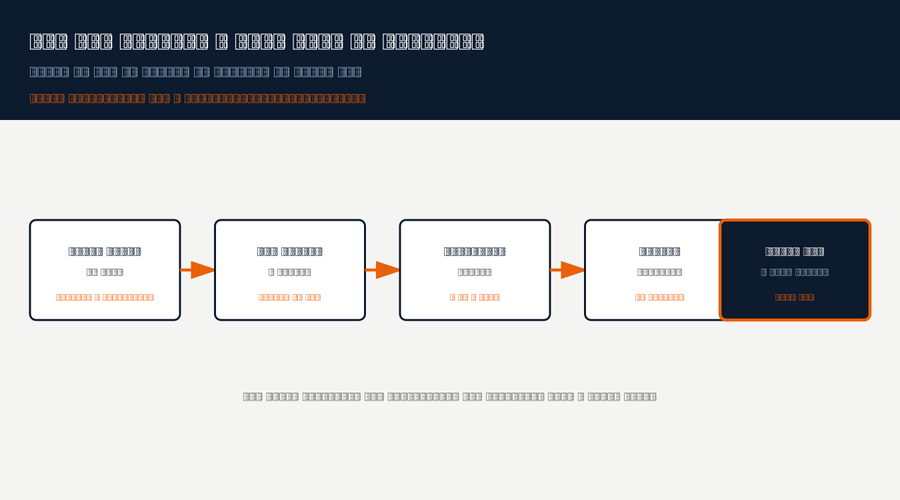
The RFI does not exist in isolation. It moves through a chain, and each stage has a typical turnaround.
| Stage | Responsible Party | Typical Turnaround |
|---|---|---|
| Raise RFI | Site supervisor / foreman | Same day issue identified |
| Log and submit | Project manager / site engineer | Within 24 hours |
| Technical review | Design consultant (architect/engineer) | 3 to 7 working days |
| Formal response | Consultant, in writing | As per contract terms |
| Close out | Site team implements and records | Same day as response |
Under NCA guidelines for registered contractors and consultants in Kenya, project correspondence including RFIs should form part of the permanent project record, available for inspection during dispute resolution or professional review. That means every RFI you raise, and every response you receive, needs to be filed, not just texted and forgotten.
If a response has not arrived by the requested date, follow up in writing, not verbally. A verbal chase leaves no trail and weakens your position if the delay later affects the programme.
n
RFI Numbering and Filing — Building a System That Scales
n
A single missed RFI number seems harmless on a small job. On a project with three subcontractors and two consultants, it becomes chaos fast. That is why a numbering system matters from day one, not after the first dispute.
n
In simple terms, tie every RFI number to the discipline and the drawing register. RFI-STR for structural, RFI-ARC for architectural, RFI-MEP for mechanical, electrical and plumbing. Keep a master register, even a simple shared spreadsheet, listing every RFI number, the date raised, the date answered, and the current status. This single sheet becomes the fastest way to answer the question every project manager eventually asks: what is actually holding up the programme right now.
n
Honestly, the projects that handle RFIs well are rarely the ones with the most sophisticated software. They are the ones where one person, usually the site engineer or project manager, owns the register and updates it daily. Without that ownership, RFIs get raised on WhatsApp, answered in a phone call, and never make it into the official record, which means they offer zero protection when a claim or dispute comes up months later.
n
Common Mistakes That Delay RFI Responses
The truth is, most RFI delays are self-inflicted. Here is what causes them.
Vague questions force the consultant to guess what you actually need, which triggers a round of clarifying questions before the real answer even starts. Combining multiple unrelated issues into one RFI means the whole thing waits on the slowest item. Missing attachments force the reviewer to go back to base drawings themselves, adding time to their side of the process. And RFIs raised too late, after the crew has already stopped work, put pressure on the consultant to rush a technical decision, which is bad for quality and bad for you if it goes wrong.
One RFI, one issue, one clear question, with the drawing or photo attached. That discipline alone will cut your average response time significantly.
RFIs Across Disciplines — Not Just for Engineers
This is not only an engineer’s document. Architects raise RFIs on finishes schedules that don’t match site conditions. Quantity surveyors raise them when a BOQ item cannot be priced without a missing specification. Electricians and plumbers raise them constantly, because MEP coordination drawings are where most clashes surface, especially when a ceiling void has less space than the drawings assumed.
If you are a mason, tiler, or artisan working under a supervisor, you may never write an RFI yourself, but you should know when to flag an issue to your foreman so they can raise one. Silence on site because “it’s not my job to ask” is how small design gaps become expensive rework.
Frequently Asked Questions
Q: What is the difference between an RFI and a variation order?
An RFI is a question seeking clarification, and it does not by itself change the scope, cost, or time of the contract. A variation order is a formal instruction that changes the work. Sometimes an RFI response leads to a variation, but the two documents serve different purposes and should never be confused on a project record.
Q: Who is allowed to raise an RFI on a construction project?
Typically the main contractor’s site team, through the project manager or site engineer, raises RFIs to the design consultants. Subcontractors usually route their questions through the main contractor rather than going directly to the architect or engineer, unless the contract states otherwise.
Q: How many RFIs on a project is considered normal?
There is no fixed number, since it depends on design complexity and coordination quality. A well-coordinated project with clash detection done in advance will have far fewer RFIs than one where drawings from different disciplines were never checked against each other. A high volume of RFIs on one drawing set is usually a sign of poor design coordination, not poor site management.
Conclusion
An RFI is not paperwork for its own sake. It is how you protect your programme, your budget, and your professional record when the drawings do not match reality, which happens on every project. Write it clearly, attach evidence, ask one question at a time, and file every response. Master this one document and you will spend far less time firefighting on site.
Want more practical construction knowledge delivered directly to you?
Subscribe to our YouTube channel: https://www.youtube.com/@TheCivilEngineeringHub-001
PS: Join our engineering WhatsApp community for daily learning at +254731393520