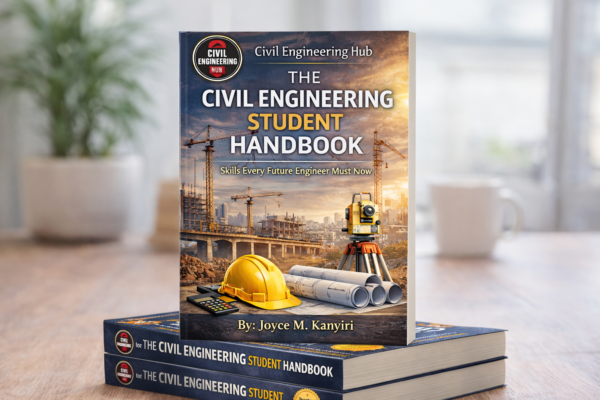
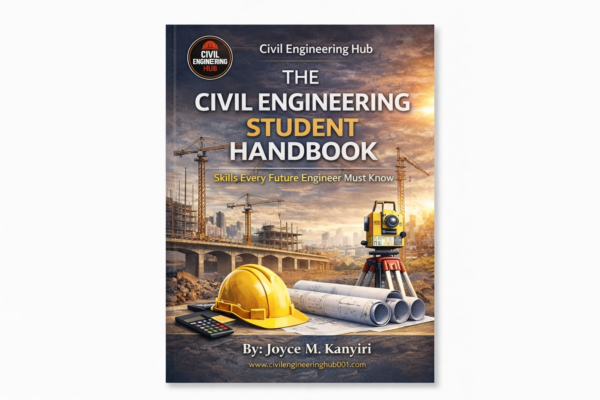






THE CIVIL ENGINEERING STUDENT HANDBOOK
Skills Every Future Engineer Must Know
The Civil Engineering Student Handbook is a comprehensive practical guide created to help civil engineering students, graduates, interns, and young professionals bridge the critical gap between classroom theory and real-world engineering practice.
Many students spend years learning engineering concepts in school, only to arrive on construction sites feeling confused, unprepared, and unsure of what is actually happening around them.
Questions like:
- How do I read construction drawings properly?
- What exactly should I be observing on site?
- How do construction projects actually flow from start to finish?
- What are all these symbols, abbreviations, and technical notes?
- How do I prepare for attachment or internship and actually learn something meaningful?
- How do I position myself professionally as a future engineer?
This handbook was created to answer those exact questions.
It is not just another theory textbook.
It is a practical industry-focused guide designed to help you build confidence, practical understanding, and professional readiness.
What You Will Learn Inside
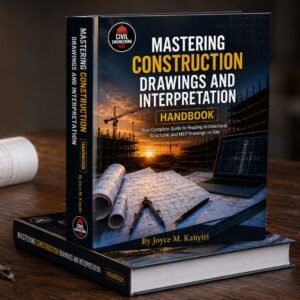
1. Construction Drawings and Drawing Interpretation
Learn how to confidently read and understand construction drawings, including:
- Architectural drawings
- Structural drawings
- Floor plans
- Elevations
- Sections
- Reinforcement details
- Schedules
- Dimensions
- Layout interpretation
If drawings have ever looked confusing, this section will help you understand how to approach them systematically.
2. Symbols, Abbreviations, and Construction Documentation
Construction projects involve technical language that many students struggle with.
This handbook helps you understand:
- Common architectural symbols
- Structural drawing symbols
- Drawing abbreviations
- General notes
- Specifications
- BOQs
- Project documentation
- Technical references used in construction
This helps you stop feeling lost when reviewing drawings or project documents.
3. Site Understanding and Construction Workflow
Knowing theory is one thing. Understanding how a project actually runs is another.
Inside, you will learn:
- How construction sites operate
- Sequence of construction works
- Site coordination basics
- Common site activities
- Site workflows and operations
- Practical site awareness
This helps you become more observant and more effective when on site.
4. Roles and Responsibilities on Site
Construction involves many professionals working together.
This handbook helps you understand the role of:
- Civil Engineers
- Structural Engineers
- Architects
- Quantity Surveyors
- Contractors
- Site Supervisors
- Technicians
- Foremen
- Consultants
- Project Managers
This gives you a clearer understanding of how construction teams function.
5. Construction Materials, Measurements, and Structural Basics
Build stronger technical understanding in practical areas such as:
- Concrete basics
- Reinforcement fundamentals
- Formwork basics
- Masonry
- Construction materials
- Measurements
- Basic quantities
- Structural terminology
- Foundations
- Columns
- Beams
- Slabs
This creates stronger engineering awareness beyond classroom notes.
6. Attachment and Internship Preparation
Many students waste their industrial attachment because they do not know how to approach it.
This handbook helps you understand:
- How to prepare before attachment
- What to observe on site
- What questions to ask
- How to maximize learning opportunities
- How to behave professionally
- Common mistakes to avoid
This section alone can completely change your attachment experience.
7. Professionalism, Communication, and Reporting
Technical knowledge alone is not enough.
Learn practical professional skills such as:
- Communication on construction projects
- Site professionalism
- Reporting basics
- Engineering communication etiquette
- Documentation habits
- Work discipline and mindset
These are skills employers and industry professionals value highly.
8. Software Direction and Career Guidance
One major challenge students face is confusion about software.
This handbook provides guidance on:
- Software every civil engineering student should know
- Learning pathways
- Industry relevance
- Direction for digital engineering growth
This helps you avoid learning randomly without structure.
9. Career Growth and Industry Readiness
Prepare yourself for life beyond school.
Learn about:
- CV building
- Portfolio development
- Networking
- Interview preparation
- Personal branding
- Career growth strategies
- Professional positioning
This helps you become more employable and industry-ready.
Who This Handbook Is For
This handbook is ideal for:
- Civil Engineering Diploma Students
- Civil Engineering Degree Students
- Attachment Students
- Internship Students
- Graduates
- Young Engineers
- Technicians
- Site Supervisors
- Contractors
- Construction Professionals seeking stronger practical understanding
Why This Handbook Is Different
Unlike traditional textbooks that focus heavily on theory and calculations, this handbook focuses on practical engineering understanding.
It is built around real student struggles and real industry gaps.
It helps you:
- Stop feeling lost on site
- Understand drawings with confidence
- Know what to observe during practical training
- Build professional confidence
- Become more practical and industry-ready
Instant Access After Purchase
This handbook is delivered as a digital soft copy (e-book).
Immediately after payment:
- You receive instant access
- You are directed to the download page
- You can download your handbook immediately
- You can begin learning right away
No waiting. No delays.
Invest in Your Engineering Growth Today
If you are serious about becoming a more confident, practical, and well-prepared engineer, this handbook was created for you.

Reviews
There are no reviews yet.