

If you have ever been on a site where the soil is soft, the loads are heavy, and individual footings simply do not make sense, you have already seen the reason why raft foundations exist. This type of foundation is one of the most widely used in building construction, yet many students finish their coursework without fully understanding when to apply it or why.
This post breaks it down clearly.. what a raft foundation is, how it works, when engineers specify it, and what you need to know before you encounter one on site.
What Is a Raft Foundation?
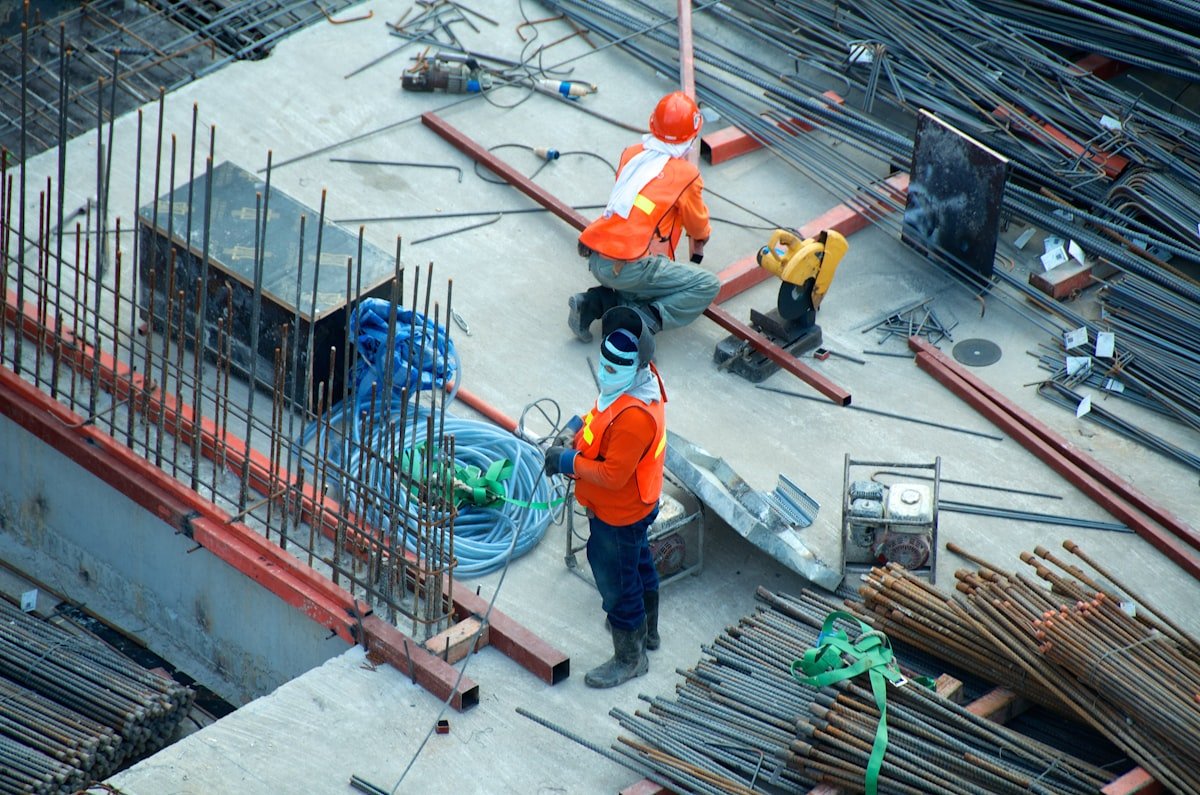
A raft foundation.. also called a mat foundation.. is a thick reinforced concrete slab that covers the entire footprint of a building. Instead of transferring load through individual columns or strip footings at specific points, the raft spreads the total structural load evenly across the full base area.
In simple terms.. think of it as the building sitting on a large concrete platform. That platform carries all the loads from the structure above and distributes them to the ground below.
The slab is typically heavily reinforced with steel bars in both directions, and its thickness varies depending on the structural load and soil conditions. Depths commonly range from 300mm to over 600mm for residential and commercial buildings.
How Does a Raft Foundation Work?
The principle behind a raft foundation is load distribution. When a building has multiple columns or walls, each one generates a load that must be transferred safely into the ground. If the soil is weak, individual pad footings under each column would need to be very large to avoid exceeding the bearing capacity of the soil.
At some point, those individual footings start to overlap. When that happens, it makes more structural sense to merge them into one continuous slab.. and that is exactly what a raft does.
The raft acts as a rigid element. It ties all the columns and walls together at the base, distributes loads evenly, and reduces the pressure on any single point of the ground. This is why raft foundations perform well on soft or compressible soils where differential settlement is a concern.
When Do Engineers Use a Raft Foundation?
Raft foundations are specified when conditions on site make individual footings impractical. The most common situations include:
- Weak or compressible soil where bearing capacity is low.. a raft reduces the pressure per unit area by spreading it over a larger surface.
- Heavy structural loads from high-rise or large commercial buildings that would require oversized individual footings.
- High water table conditions where the continuous slab acts as a barrier and reduces the risk of water infiltration.
- When footings would overlap during design.. merging them into a raft is more efficient and more economical.
- Sites with variable soil conditions where different soil types could cause uneven settlement under individual footings.
The truth is.. a raft foundation is not always the most economical option. On firm, stable soils, strip or pad footings are faster to construct and cost less. Engineers choose the raft when site conditions demand it, not as a default.
Types of Raft Foundations
Not all raft foundations are the same. There are several variations depending on the structural demands of the project.
Flat slab raft: A uniform thickness slab across the full area. This is the simplest and most common type for low to medium-rise buildings where loads are relatively even.
Beam and slab raft: Upstand or downstand beams are built into the slab to carry heavier column loads. The beams run in two directions, stiffening the raft and allowing a thinner slab between beam lines.
Cellular raft: A more complex form with hollow cells within the slab to reduce self-weight while maintaining rigidity. Used for very large or heavily loaded structures.
Piled raft: A combination of piles and a raft slab. The piles carry a portion of the load down to deeper, stronger soil while the raft distributes the remainder. This is the solution when soil conditions are too poor for a conventional raft alone.
What to Check on Site Before Pouring a Raft
If you are supervising or assisting with a raft foundation pour, there are a few things that must be confirmed before any concrete goes in.
First, check that the blinding layer.. a thin concrete base layer.. is level and at the correct depth. The raft slab must be cast on a clean, compacted, level surface.
Second, verify the reinforcement layout. Raft slabs are reinforced in two directions, top and bottom, so there are typically four layers of steel bars. Check bar spacing, diameter, and cover to the formwork on all sides.
Third, confirm that the concrete grade specified matches what is being delivered. Raft foundations typically use C25/30 or higher, depending on the structural design.
Finally, check that starter bars for columns and walls are correctly positioned and tied in place before the pour begins. Once the concrete is down, they cannot be moved.
The Key Takeaway
A raft foundation is one of the most practical solutions when soil conditions or structural loads make individual footings insufficient. Understanding how it distributes load, when to specify it, and what to check on site puts you ahead of most students who only encounter it in theory.
Honestly.. this is the kind of knowledge that separates a student who has read textbooks from one who is ready to work on site. Know your foundations, and you will always have a solid base to build from.
The next time you see a large concrete slab being poured at the base of a building, you will know exactly what is happening and why.
Want more practical civil engineering knowledge delivered directly to you?
👉 Subscribe to our YouTube channel: https://www.youtube.com/@TheCivilEngineeringHub-001
PS: Join our engineering WhatsApp community for daily learning at +254731393520